Fremont Lutheran Church Harvest Dinner: Community Fellowship and Liturgical Context
The Fremont Lutheran Church in Nyman appears on the KMAland community listing as the host of a Harvest Celebration Dinner.
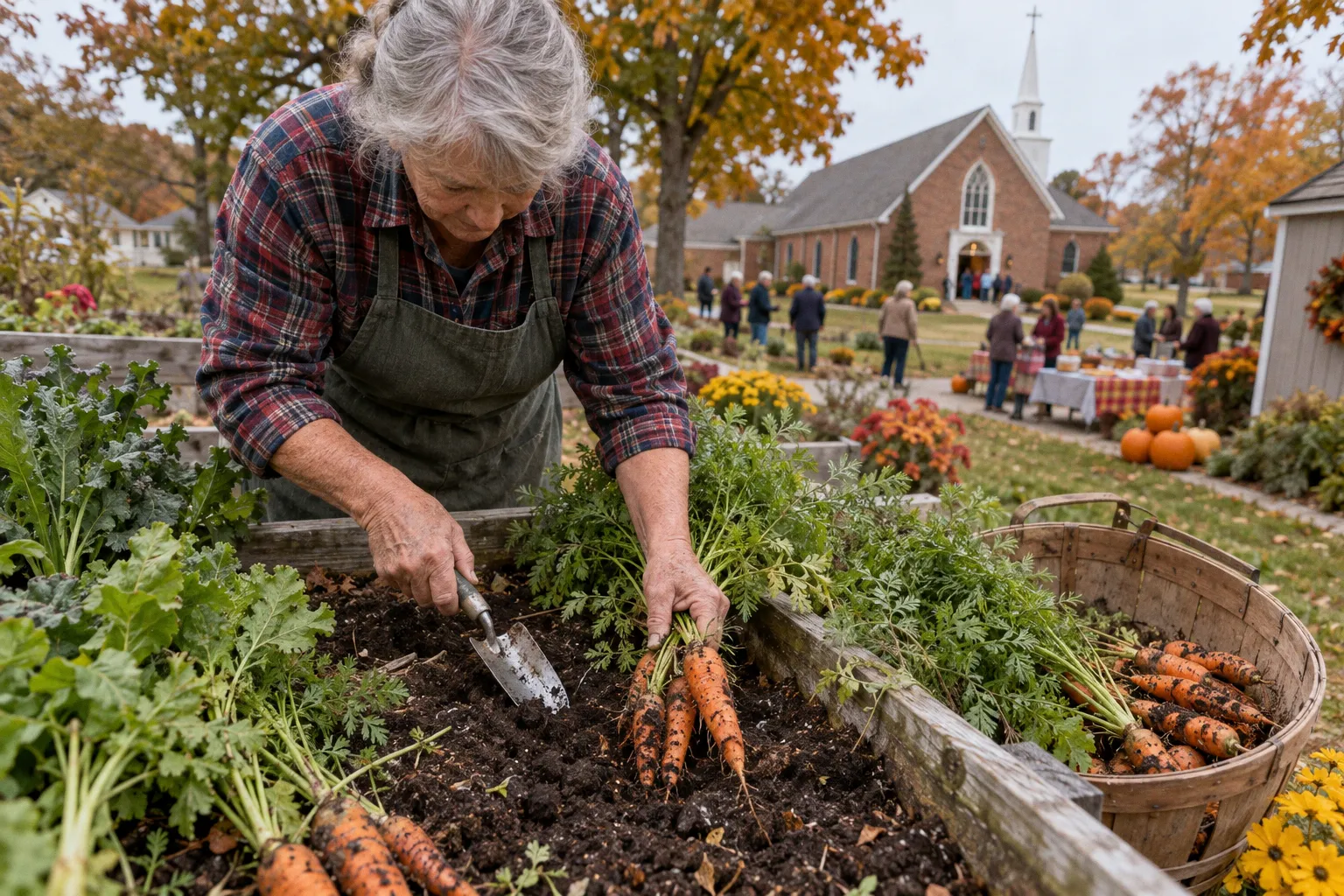
Public notice at this stage is limited to the event title; logistics such as date, time, menu format, and program elements have not been published in the available source material.
Local Notice in a Broader Liturgical Frame
This local notice sits inside a wider liturgical window now active across Lutheran congregations. Good Faith Media has circulated a "Call for Water Justice During the Season of Creation," framing the current weeks as a structured period for creation-care reflection rather than a generic harvest festival. The convergence matters because a harvest meal held outside the Season of Creation functions as a parish potluck; held within the Season, the same meal operates as a catechetical event keyed to creation theology.
A Parallel Denominational Statement
The timing coincides with a denominational action reported by the Lutheran Alliance for Faith, Science and Technology: the Evangelical Lutheran Church in America has released a foundational paper applying existing social teachings to artificial intelligence, examining human innovation, creation care, social justice, and church discernment ahead of further ethics discussions. The document is described as foundational rather than prescriptive, which positions it as a supplier of vocabulary and categories for parish-level discernment rather than as a binding policy text.
Operational Points for Parish Planners
Three administrative considerations follow from this cluster of notices.
First, verify event particulars directly with the host congregation. A community calendar entry is not a substitute for a parish bulletin; the published notice does not establish whether the dinner is open to walk-ins, whether reservations are required, or whether a freewill offering is requested.
Second, treat the Season of Creation as a liturgical rubric with measurable components. The water-justice framing from Good Faith Media supplies one specific lens; congregations may pair it with confession, intercession for agricultural labor, or a hymnody set keyed to the assigned lectionary readings.
Third, file the ELCA's AI paper alongside other governance documents already on the council agenda. Its four stated categories — human innovation, creation care, social justice, and church discernment — correspond to standing committee portfolios, which makes its initial review administratively tractable rather than a separate initiative.
The administrative pattern across these three notices is one of convergence. Harvest, watershed, and machine intelligence are now being held within the same set of conversations on the ELCA's public calendar. Stewardship, in this framing, is no longer a siloed budget line but a single category applied to soil, water, and emerging technology alike.