Darlene Zschech Reveals the Personal Hardships Behind Shout to the Lord
Australian worship leader Darlene Zschech, formerly of Hillsong, has offered new commentary on the circumstances surrounding the composition of "Shout to the Lord," according to an interview…
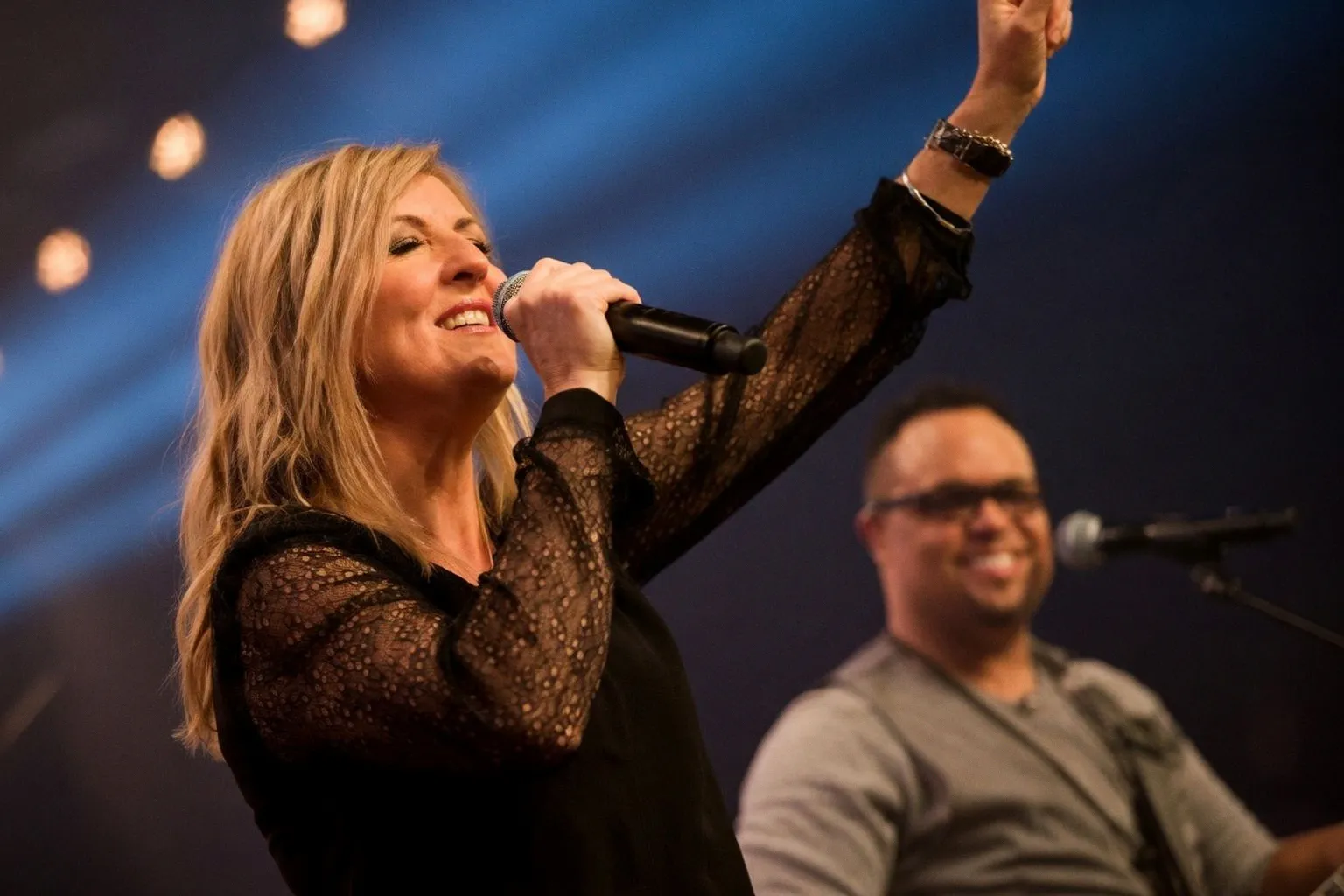
Australian worship leader Darlene Zschech, formerly of Hillsong, has offered new commentary on the circumstances surrounding the composition of "Shout to the Lord," according to an interview published by Christian Post on Michael Foust's "Crosswalk Talk" podcast. Her remarks situate the song within a period of personal financial strain and family difficulty, and connect its emergence to what she describes as a recurring pattern of new congregational song arising alongside spiritual awakening.
The Origin of the Song
Zschech composed "Shout to the Lord" during a season in which her household was under considerable material pressure. She and her husband were raising two young children, their business was struggling, and she supplemented the family's income by recording advertising jingles. Sitting at her piano one day, she composed the piece in roughly twenty minutes, describing the process as a sustained prayer rather than a structured songwriting exercise. "I just sang it, and I sang it, and I sang it, and it was just a prayer to the Lord," she said.
The account provides a useful case study for examining how congregational song emerges from individual spiritual practice. Within a Lutheran framework, the relationship between private devotion and corporate worship carries particular weight: texts intended for assembly use are generally assessed for theological clarity, doctrinal consonance, and durability across liturgical seasons, irrespective of the circumstances of their composition. Zschech's narrative raises no concern on these grounds; the text itself would still require the same evaluation as any other candidate for inclusion in a congregation's repertoire.
Revival Language and Generational Succession
Beyond the song's personal genesis, Zschech used the interview to articulate a broader thesis about the relationship between worship and revival. She argued that "the new song has always coexisted with a fresh revival on the Earth," and characterized the present moment as another such season. Her remarks also include a direct appeal to younger worship leaders: "get on our shoulders and go as high and as wide as you can."
This generational framework has historical precedent within Lutheran worship practice. The Lutheran hymnal tradition developed through successive waves of composition, each layer building upon confessional foundations established by earlier writers. The task of evaluating new hymnody has always involved balancing continuity with the historic faith against authentic expression of contemporary experience — a matter of stewardship rather than stylistic preference.
Practical Considerations for Worship Planners
For congregations considering how contemporary songs such as "Shout to the Lord" function within a liturgical structure, several points merit attention. First, the theological content of any proposed addition should be examined against the confessional standards already operative in the congregation's liturgy. Second, the musical idiom should be assessed for its capacity to serve the assembly rather than to showcase individual performance — a tension Zschech herself acknowledged when she observed that "we're not trying to be clever; we're trying to release something out of people." Third, the pastoral circumstances of any composer, however compelling, should not displace the formal criteria by which worship materials are evaluated.
Zschech's reflections, while rooted in a worship tradition distinct from Lutheran practice, offer a clarifying example of how personal adversity can produce texts of enduring congregational utility. The methodological lesson for planners and musicians is straightforward: evaluate the text, examine the theological claims, and confirm that the song serves the assembly's confession and prayer.