How Mountain View Lutheran Church Synchronizes Hybrid Worship Services
According to Mountain View Lutheran Church, the congregation held its Thirteenth Sunday after Pentecost service on August 23, 2026, with both in-person and online participation.
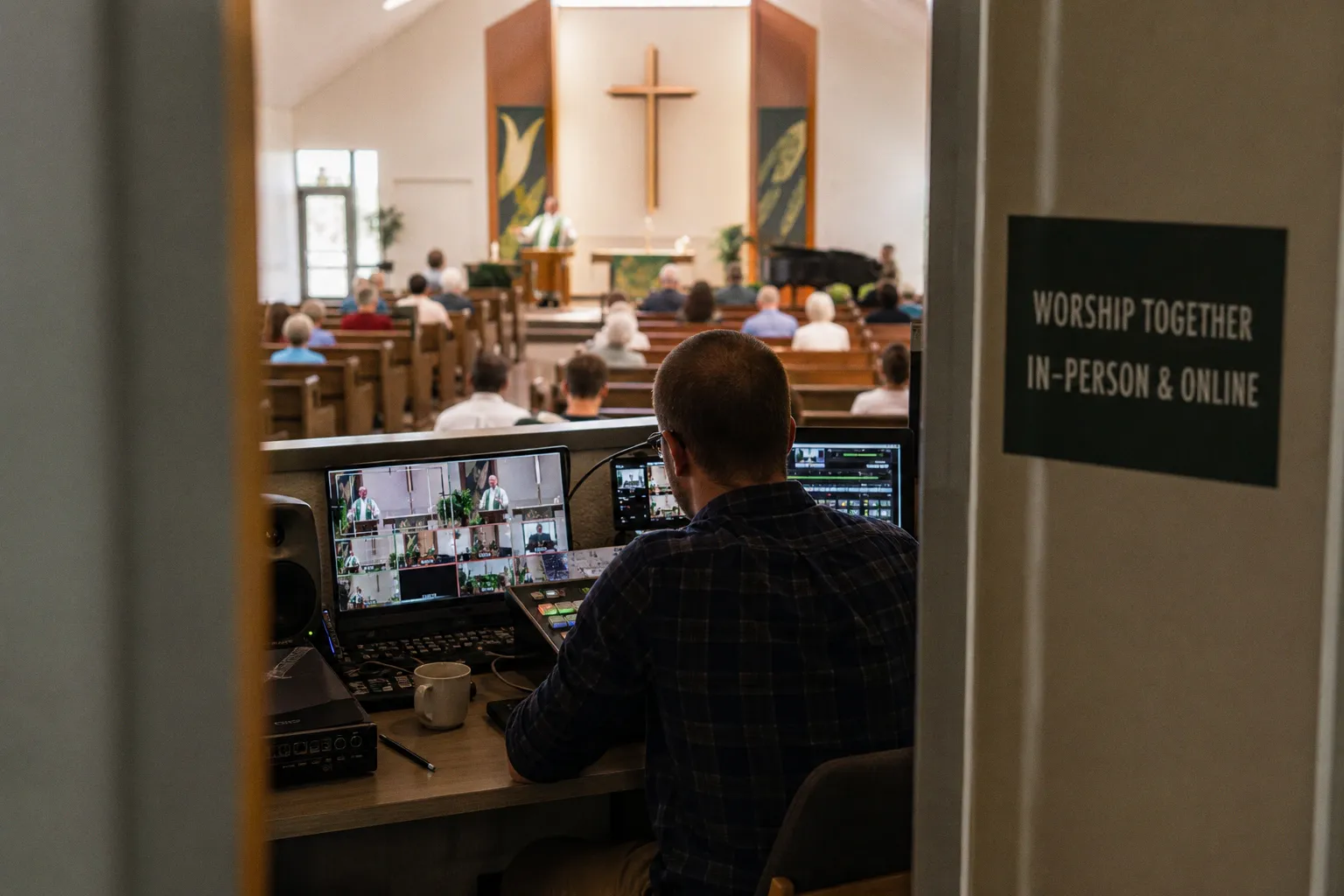
The arrangement included a digital worship folder and livestream access, establishing a two-part structure for remote worship rather than treating the broadcast as a separate, reduced-format substitute. For congregations managing hybrid worship, the practical issue is therefore not only transmission, but the coordination of liturgical materials with the service itself.
The operational structure of the service
Mountain View Lutheran Church identified two components for online participation:
1. The worship folder. Worshipers were directed to download or view a PDF version of the service materials. The notice specified that a PDF reader was required, while also noting that most smartphones and computers include one.
2. The livestream. The service was available online at 9:30 a.m. on August 23 and afterward. The congregation directed viewers to an embedded player, with Facebook and YouTube listed as alternative viewing options if the embedded player presented difficulties.
This framework matters because a livestream alone does not reproduce the full order of worship. The digital folder supplies the textual and procedural structure that allows remote participants to follow the service, while the video supplies the audiovisual connection to the gathered congregation. The efficacy of the arrangement depends on both elements being available and clearly associated with the same liturgical occasion.
For worship planners, the model also creates a straightforward administrative sequence: publish the service materials, identify the primary viewing location, provide a fallback platform, and state whether the recording remains available after the scheduled service. Mountain View’s notice included each of these elements in compact form.
The wider August 23 pattern
Other Lutheran congregations also used online resources for worship on August 23, although the documented arrangements differed.
Salem Lutheran centered its service on Matthew 16:13–20 and the confession that Jesus is the Christ, the Son of the living God. The service included Scripture readings and four hymns, and its livestream was scheduled to begin at 9 a.m.; the video was then described as available for later viewing. This provides a second example of how online worship communication can connect the broadcast schedule with the service’s biblical and musical framework.
Zoar Lutheran Church published an order of service for its August 23 gathering and directed viewers to a live Facebook broadcast. It also displayed a prayer-list update dated August 21. In administrative terms, this combines three forms of congregational communication: the liturgical order, the access point for remote participation, and a prayer-related update.
These examples should not be treated as evidence of a single standardized Lutheran practice. They do, however, show a common operational requirement: worship information must be organized so that participants can determine what is being offered, when it begins, and which materials or platforms are necessary.
What to verify in a hybrid worship notice
A useful worship notice should allow a participant to answer four questions without searching through multiple pages:
- Is the service available in person, online, or both?
- What is the starting time?
- Where is the order of service or worship folder?
- What alternative viewing option exists if the primary player fails?
Mountain View’s August 23 notice addressed these questions through its combined folder-and-livestream format. The same structure can serve as a durable rubric for future announcements, provided that each service’s date, time, platform, and materials are separately confirmed.
The principal lesson is procedural. Online worship requires stewardship of access, documents, and timing as a single system. When those components are aligned, the congregation gives remote participants a defined way to follow the liturgy rather than merely observe a video feed.