Optimizing Lutheran Worship Planning with New Augsburg Fortress Resources
According to the Grand Canyon Synod, Augsburg Fortress has announced new planning and liturgy tools for Lutheran congregations, including a Sundays and Seasons Music Leader Module and Callista…
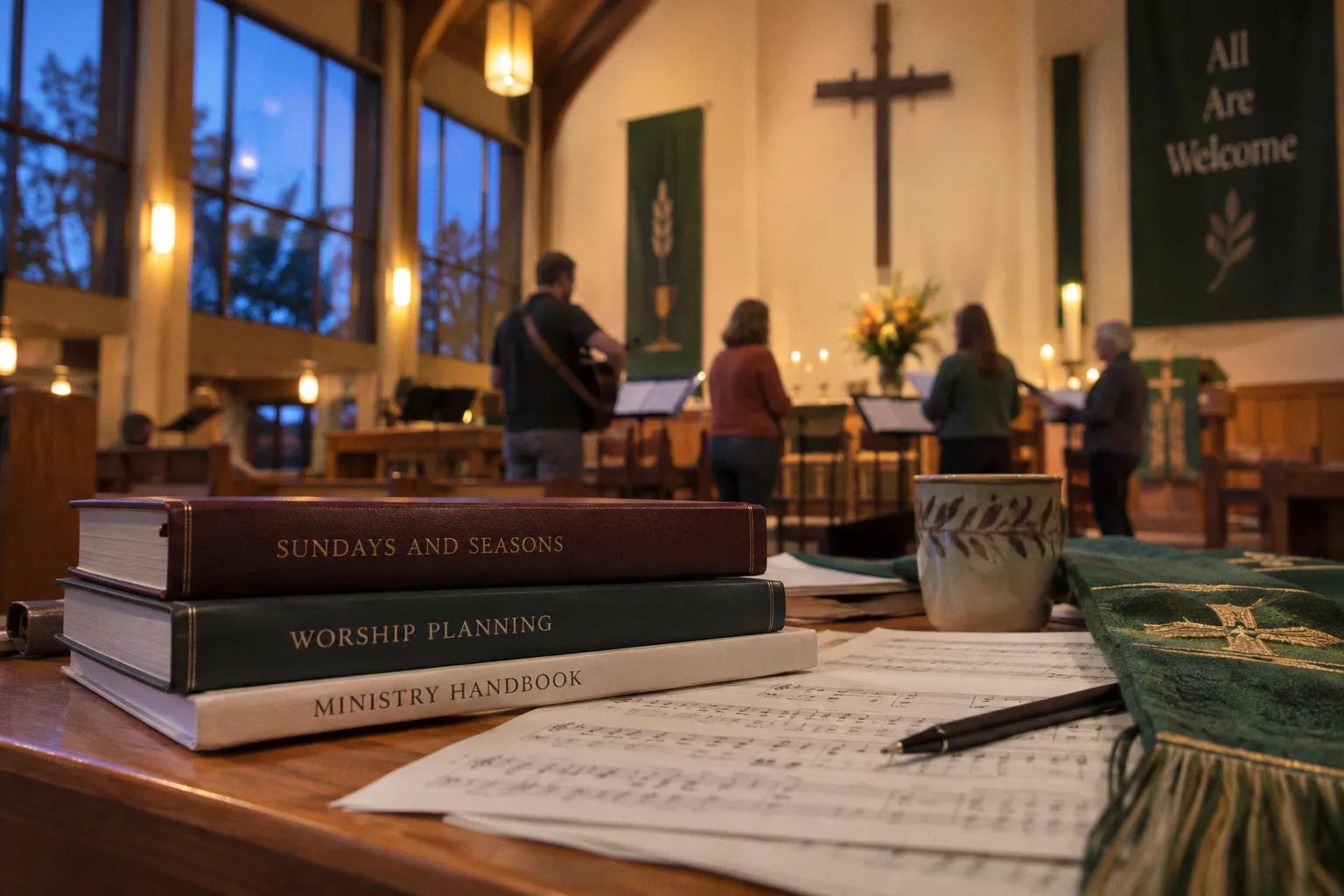
According to the Grand Canyon Synod, Augsburg Fortress has announced new planning and liturgy tools for Lutheran congregations, including a Sundays and Seasons Music Leader Module and Callista Isabelle’s handbook for presiding ministers. The announcement is relevant because it addresses two distinct operational responsibilities in worship planning: musical coordination and the work of the presiding minister. Congregations should therefore evaluate the resources by function rather than treat them as a single undifferentiated update.
1. Identify the planning responsibility
The Music Leader Module belongs primarily to the preparation of congregational song and musical leadership. A congregation reviewing this resource should first determine who currently coordinates that work, what planning materials are already in use, and where the existing process produces duplication or uncertainty.
The handbook by Callista Isabelle addresses presiding ministers, placing it within a different part of the liturgical framework. Its practical value should be assessed in relation to the responsibilities of those who lead the service, rather than those who select or prepare music. This distinction matters because worship planning becomes less efficient when one resource is expected to resolve several unrelated administrative tasks.
A simple internal classification is sufficient:
1. Music leadership: preparation of songs and musical elements.
2. Presiding ministry: preparation for the minister who leads the liturgy.
3. Congregational coordination: assigning responsibility, reviewing materials, and confirming the final service plan.
The announcement confirms the existence and intended audience of the first two tools. It does not, on its own, establish how a particular congregation should implement them.
2. Use a controlled review process
The most reliable next step is not immediate adoption but a short review against the congregation’s current worship-planning system. The responsible leaders can document which parts of the process are already clear and which depend on informal knowledge.
A useful review sequence is:
- Inventory current materials. Record the planning resources already used by music leaders and presiding ministers.
- Assign each new tool to its proper role. Avoid using the music module as a general presiding guide, or the handbook as a substitute for music planning.
- Check for overlap. Compare recurring preparation tasks, terminology, and responsibilities.
- Test the workflow. Use the resources during one planning cycle and note whether they clarify assignments or create additional coordination.
- Record the decision. The congregation should retain a brief note explaining whether the resource was adopted, used selectively, or set aside.
This is a stewardship issue as much as a liturgical one. New materials carry value only when they improve the efficacy of preparation and produce a more consistent relationship between the liturgical rubric and the people responsible for carrying it out.
3. Keep resource news distinct from local ministry scheduling
The other confirmed September item concerns Victory Lutheran, which announced a Ministry Fair, AWANA, fall worship arrangements, and a return to three Sunday services. The notice identifies a concrete local pattern: a single service on Sept. 13 at 10 a.m., followed by the church’s second annual Ministry Fair; AWANA and confirmation beginning on Sept. 16; and three Sunday services returning on Sept. 20 at 8:15, 9:30, and 11 a.m., with Sunday school for all ages at 9:30 a.m.
For congregations tracking worship operations, this notice illustrates a separate category of planning. Augsburg Fortress provides tools for liturgical preparation, while a local ministry calendar coordinates services, education, fellowship, and participation. The two systems may need to be aligned, but they should not be conflated.
The immediate task for worship committees is therefore categorical: determine which responsibilities concern the service itself, which concern the people preparing it, and which concern the wider congregational calendar. That framework provides the clearest basis for deciding whether the newly announced Augsburg Fortress resources address an actual planning need.