Lutheran Churches in Germany Reaffirm Commitment to Inclusion Following Regional Election Shifts
The Lutheran World Federation has reported that its member churches in Germany have reiterated their commitment to human dignity, dialogue, inclusion, and the welcome of people from all countries and…
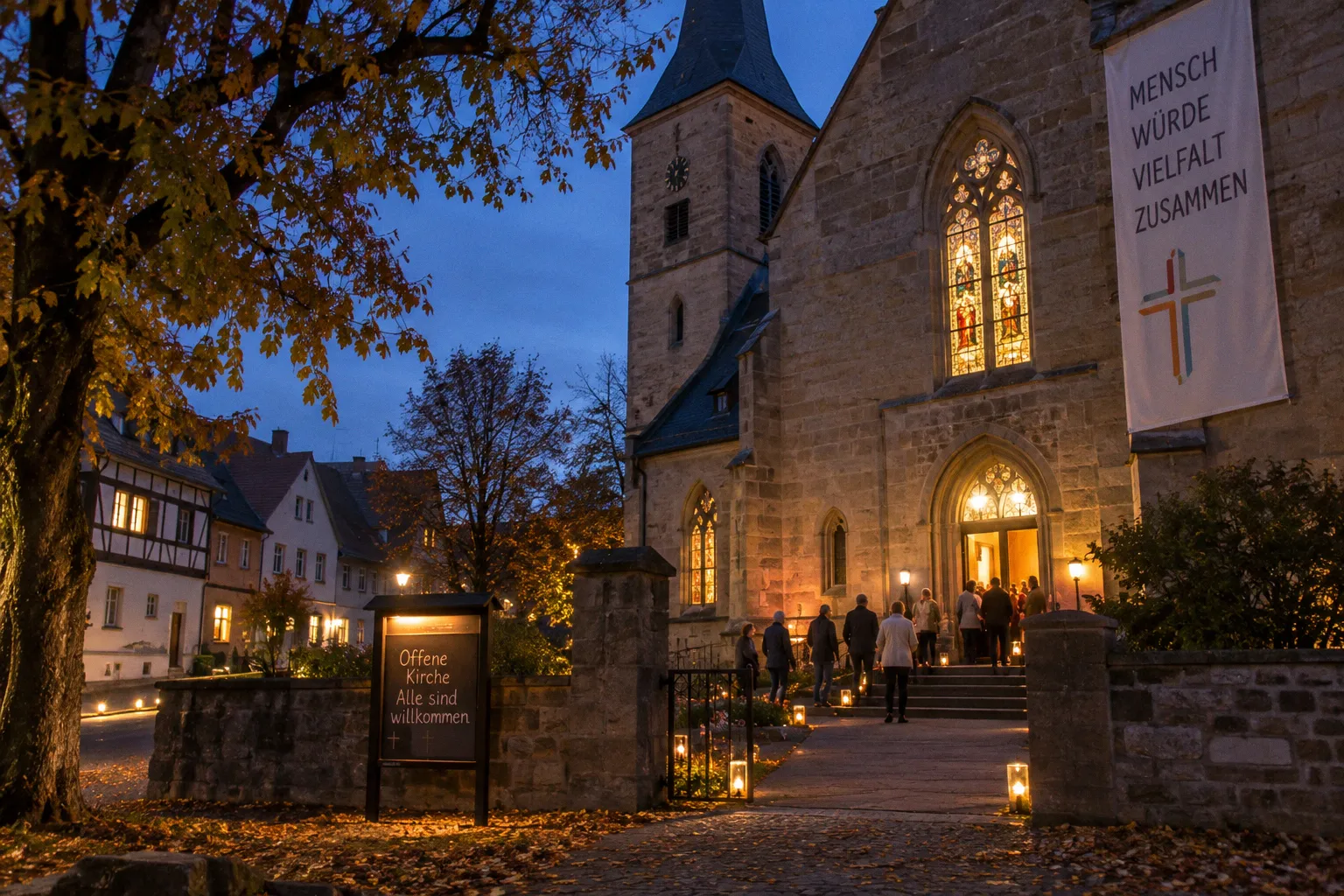
The Lutheran World Federation has reported that its member churches in Germany have reiterated their commitment to human dignity, dialogue, inclusion, and the welcome of people from all countries and cultures, following the victory of the far-right nationalist party Alternative für Deutschland (AfD) in regional elections. The response carries particular weight because the contested vote occurred in Saxony-Anhalt, the federal state containing Wittenberg — the city widely recognized as the birthplace of the Protestant Reformation. For congregations tracing the intersection of confessional identity and civic responsibility, the bishops' framework offers a structured template for theological engagement under political pressure.
The Ecclesiastical Framework of the Response
The LWF statement rests on a recognizable Lutheran theological architecture centered on the neighbor and human dignity. Bishop Kristina Kühnbaum-Schmidt, chairperson of the LWF German National Committee and Vice-President for Central Western Europe, and Bishop Tamás Fabiny, Vice-President for Central Eastern Europe, stated jointly that the church "treats one another with love for our neighbors" and that "nothing has changed in this regard." This formulation draws directly on the second table of the law, which the Lutheran confessions treat as the indispensable criterion for any claim to gospel fidelity.
Kühnbaum-Schmidt further situated the response within Reformation history, asserting that "the Reformation knows no national borders" and that "Luther's legacy unites people worldwide." This framing shifts the center of gravity from a single national context to the catholicity of the church, a move consistent with the Augsburg Confession's insistence that the church is one people gathered from all nations. Theological claims of this kind function as a measuring rod: they establish the criteria by which political pressures can be assessed without recourse to partisan vocabulary.
Wittenberg as Structural and Theological Anchor
The LWF Center Wittenberg, founded in 2009 and located in Saxony-Anhalt, served as the concrete point of reference for the bishops' statement. The center hosts training courses, conferences, seminars, and programs on identity and belonging within the global Lutheran communion. The bishops affirmed that the center "stands for dialogue, hospitality and shared learning" and that Wittenberg "remains a place of international encounter."
LWF Regional Secretary for Europe Rev. Dr Ireneusz Lukas grounded this position historically, noting that the LWF was constituted in 1947 "out of the ashes of a Europe torn apart by war, as a global communion determined to bring together people across cultures, languages and nations, to defend the dignity of every human being and ensure that the horrors just witnessed would never be repeated." For Lutheran congregations, the center's continuing programmatic function provides both a symbol and an operational structure through which theological claims about welcome are enacted in practice. The model is replicable in form if not in scale: any congregation can identify a physical or programmatic locus through which its commitments become publicly verifiable.
Practical Considerations for Congregations
For local Lutheran communities considering how to engage similar political conditions, the LWF response offers three reference points of immediate use. First, the theological criterion of neighbor-love functions as a stable standard against which shifting political climates can be assessed; it belongs to the church's own vocabulary and therefore does not depend on contemporary political categories for its legitimacy. Second, the designation of a specific site as a locus of international encounter models how ministries can identify institutional anchors that render their commitments visible and measurable. Third, the explicit framing of inclusion as a matter of human dignity, rather than of policy preference, allows the church to address civic authorities without surrendering its distinct theological register.
Congregations should also attend to the demographic context reported alongside the election: approximately 30 percent of Saxony-Anhalt's population has a migration background, and over 20 percent are first-generation immigrants. This composition transforms the question of welcome from an abstract proposition into a concrete pastoral responsibility. Local ministries may find it efficacious to review their own demographic composition, map the institutional anchors through which their commitments are publicly enacted, and rehearse the scriptural and confessional warrants for inclusion before political pressure renders such rehearsal necessary. The stewardship of public theological witness, like the stewardship of the liturgy, depends on preparation conducted prior to the moment of crisis.